Barefoot Running
What is Barefoot or Minimalist Running?
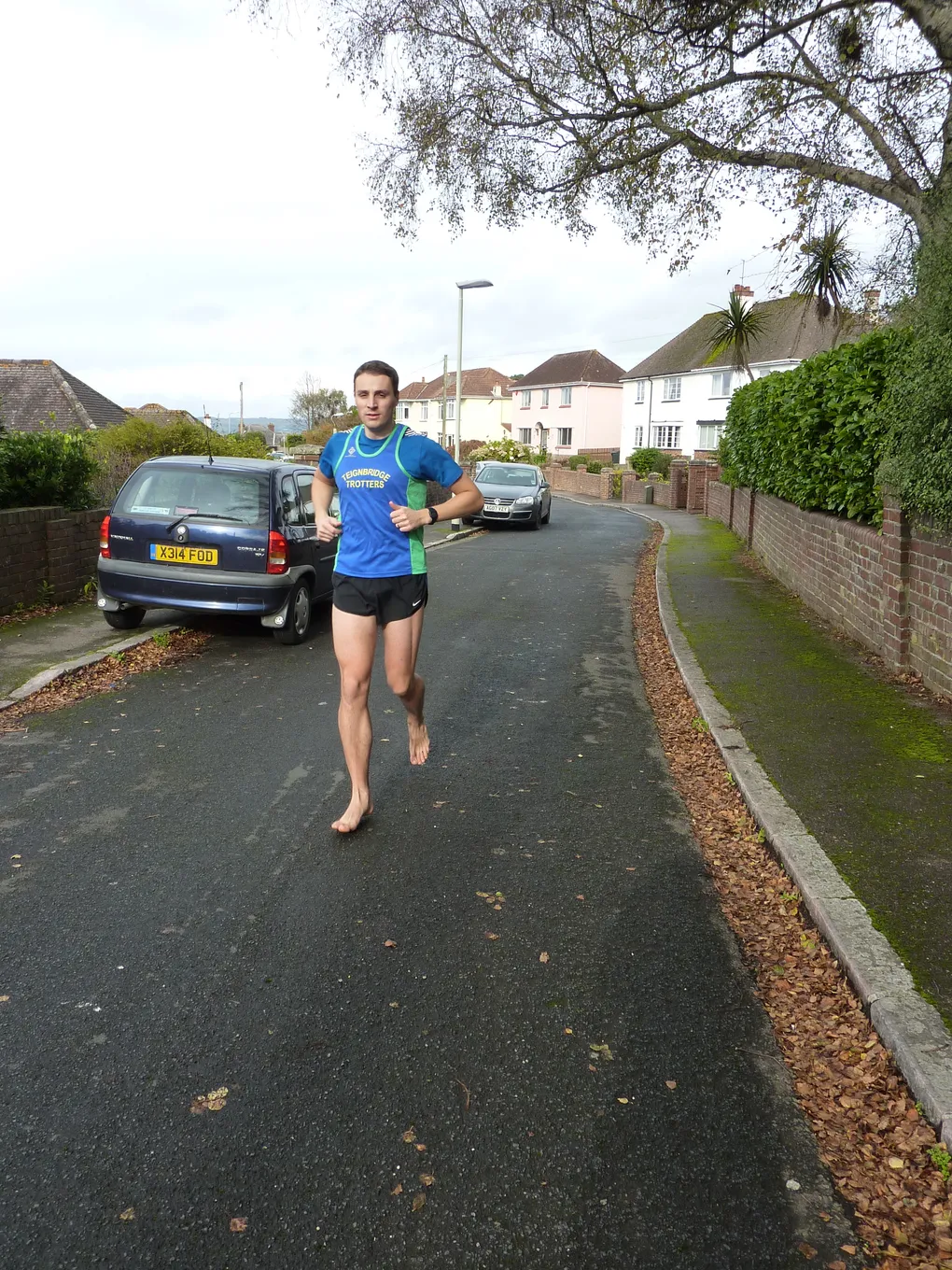
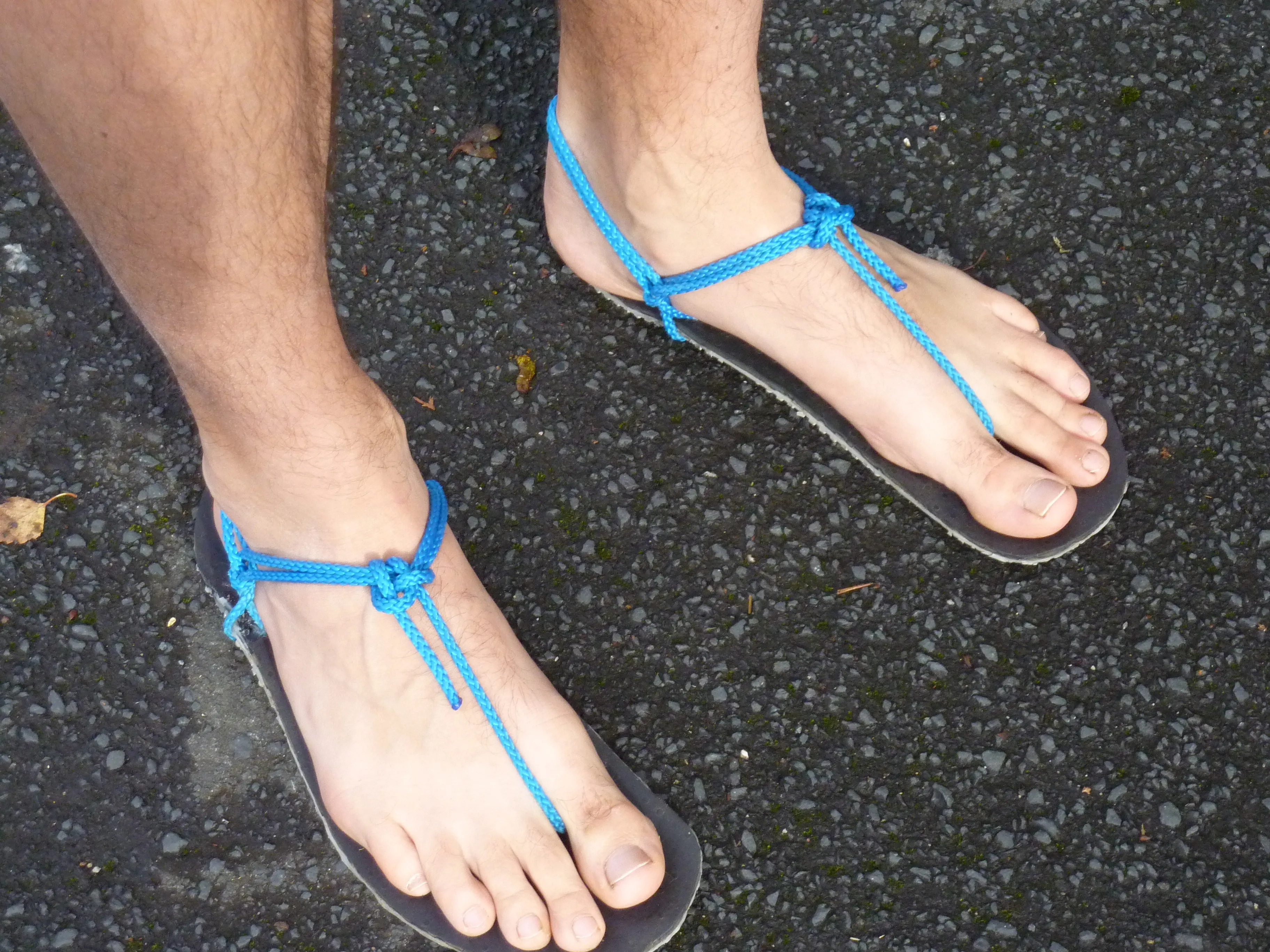
Barefoot running is running with no shoes on at all (stating the obvious!). Minimalist running is running in shoes that are very light, have no cushioning, no arch support and no pronation control. When I say no cushioning, I mean zero, literally just a layer of flat rubber between your foot and the ground. You may have seen the Vibram Five Finger shoes, which are a well-known example. I prefer to go minimalist on the cost too, and have a cheap pair of thin aqua shoes, plus I have made my own running sandals from a piece of rubber and 5mm cord, but that’s another story!
Why Run in Bare Feet?
The main reason to incorporate barefoot running is to improve your running form. Shoes get in the way of that, and in fact even change the mechanics of how we run. You will never heel strike in bare feet, because it hurts, instead you will land on your forefoot or midfoot with your foot underneath your centre of gravity. Running with a light, fast stride, without over striding (landing well in front of your centre of gravity) and heel striking means that the structure of your legs and feet can work as they have evolved to work. We were after all born to run!
Improving running form is brilliant for improving running economy – who doesn’t want to get faster for the same effort?! And I mean it too – you will see a noticeable and measurable increase in speed for the same effort (or heart rate) as your form improves and your legs adapt. This is because heel striking and over striding is literally causing a braking effect every single stride. Also, the achilles tendon is a natural spring, which if loaded correctly (by landing with a flat foot) will return most of your energy back into your next step.
Good running form also has the benefit of reducing common running injuries such as runners knee and plantar fasciitis. The foot has perfectly evolved with an arch (one of the strongest structure in nature and in engineering) and doesn’t need supporting underneath. In fact, the engineer in me knows that if you prop an arch in the middle it will transfer the load in a completely different way. This can cause muscle imbalance leading to foot weakness and injuries. There has been a lot of research which has shown no correlation between cushioned and supportive running shoes and prevention of injuries. So at the least you are wasting your money on expensive shoes.
How to Get Started
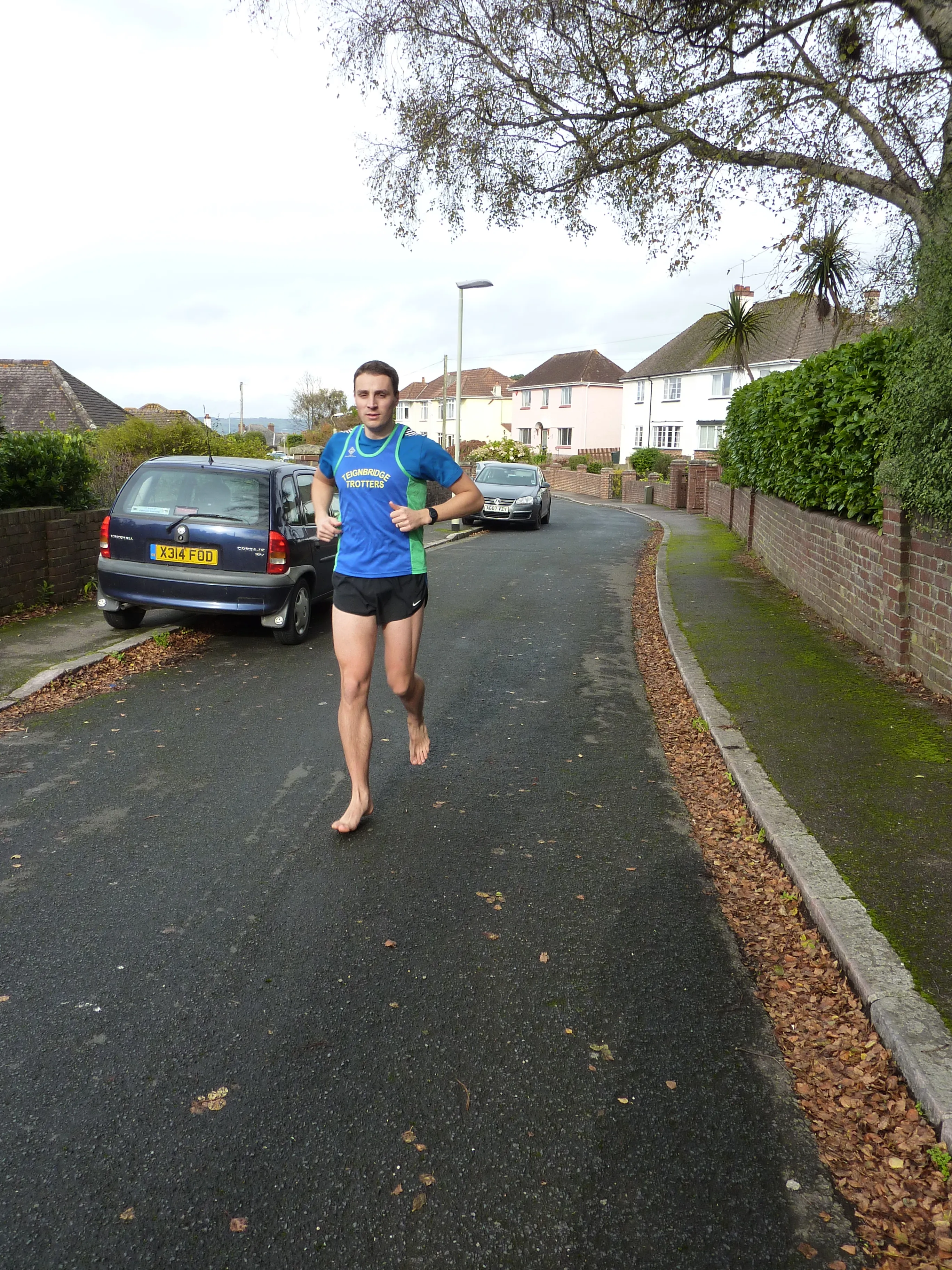
Take your shoes off and run for a short distance (half a mile at the most). A smooth, hard surface like good tarmac is best. Grass is good too. The hard surface and bare feet will mean that your feet will tell you when they have had enough for the first run. Slowly build the barefoot run distance as your feet adapt and get stronger.
Think about keeping your cadence (leg turnover) high (around 180 steps per minute is a good target) and your landing soft. Keep your body upright and head up. A great way to practice the perfect foot landing is to jump on the spot with bare feet, as if you are using a skipping rope. You will never land on your heel, you will land gently and load up those springs in the legs and spring back up. If you experiment with the frequency (cadence) you will find that there is a sweet spot of least effort. You should also try to find this sweet spot when running, but as I said it is normally around 180 steps per minute.
For me, I now don’t own a pair of “normal” running shoes. I train totally barefoot or in my homemade sandals to work on form and lower leg strength for my easy runs, and do all the rest in lightweight racing flats which are cheap, light, and have little cushioning and no support.
Common Concerns
Won’t I step on dog poo / glass / hypodemic needles? Maybe, but if you look where you are going and are running in the daylight on pavement then it is pretty unlikely. Can you even remember the last time you stepped in dog poo in shoes? I’ve now run over 200 miles barefoot and have never trod in anything untoward.
Won’t my pretty feet get ruined by callus on top of callus? If you run totally barefoot (as opposed to wearing minimalist shoes) then your soles will toughen up. But it is not like a dry callus and instead is like a soft but tough leather, much like a dog or cat’s pad on it’s paw. If you are getting blisters or cuts then you are running too far and need to ease back.
Won’t I be heckled by teenagers / beeped at by motorists? Quite possibly. I run the streets of Newton Abbot and regularly get heckled by kids, but it is a curious kind of heckling rather than anything malicious. If you run around your neighbourhood though it is likely you won’t meet many people. Plus, who cares what people think!
Final Note
Take it slow. Really slow. You may feel great initially after kicking off your shoes, but the small muscles in your feet and legs need time to adapt after spending years in “foot coffins”. Don’t worry, it won’t take months to adapt, a few weeks and you’ll be flying along with the gait of a Kenyan. And maybe I won’t be Newton Abbot’s only barefoot runner soon?
Find Out More
- Read the book “Born to Run”.
- Read the information at: http://naturalrunningcenter.com/
- Find out about the excellent research being done by Dr Lieberman of Harvard University.
Disclaimer
I am not a doctor, expert or even very clever, so use your own judgement and be responsible for your own decisions. Listen to everyone, but follow no one. Have fun!